
Why Oushak and Khotan Rugs Are So Popular in the Interior Design Industry?

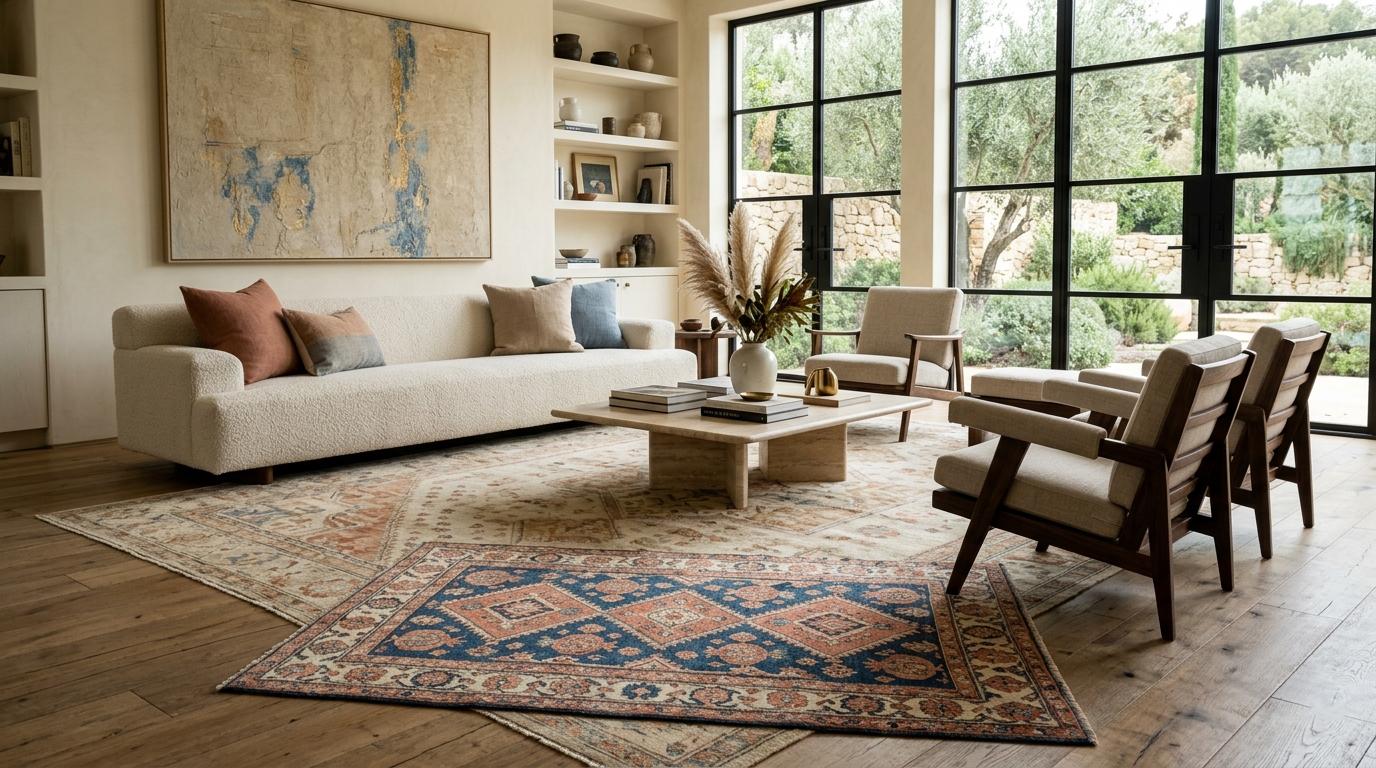
In the world of high-end interior design, few elements carry the transformative power of a truly exceptional rug. Among the many styles that designers and collectors prize, Oushak and Khotan rugs consistently stand out — not only for their extraordinary beauty, but for their remarkable ability to anchor a room, elevate a space, and tell a story that spans centuries. From minimalist modern interiors to richly layered traditional settings, these two distinctive rug traditions have earned their place at the very center of the design conversation.
But what is it about Oushak and Khotan rugs that makes them so enduringly desirable? And why do interior designers — from New York to London to Milan — continue to reach for them when they want to create spaces that feel both timeless and deeply personal?
The Enduring Appeal of Oushak Rugs in Interior Design
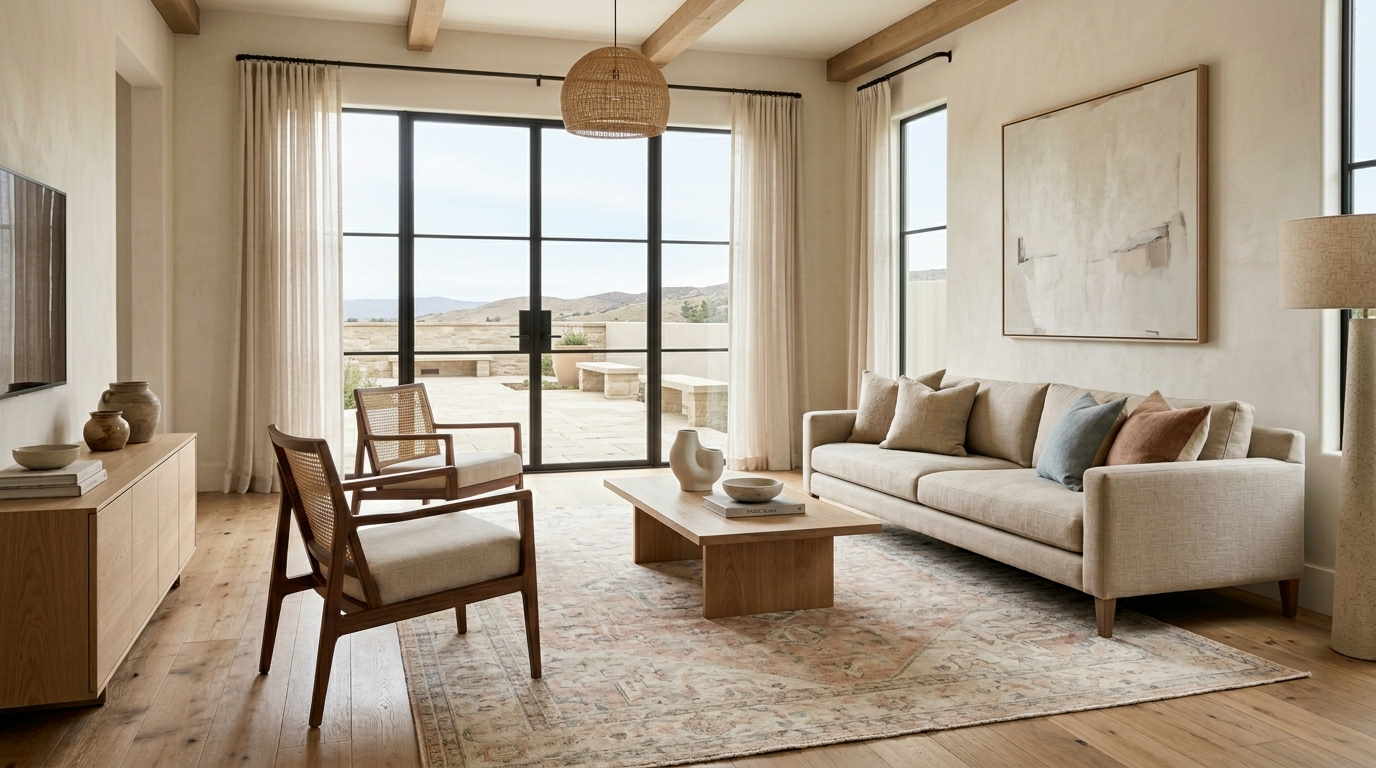
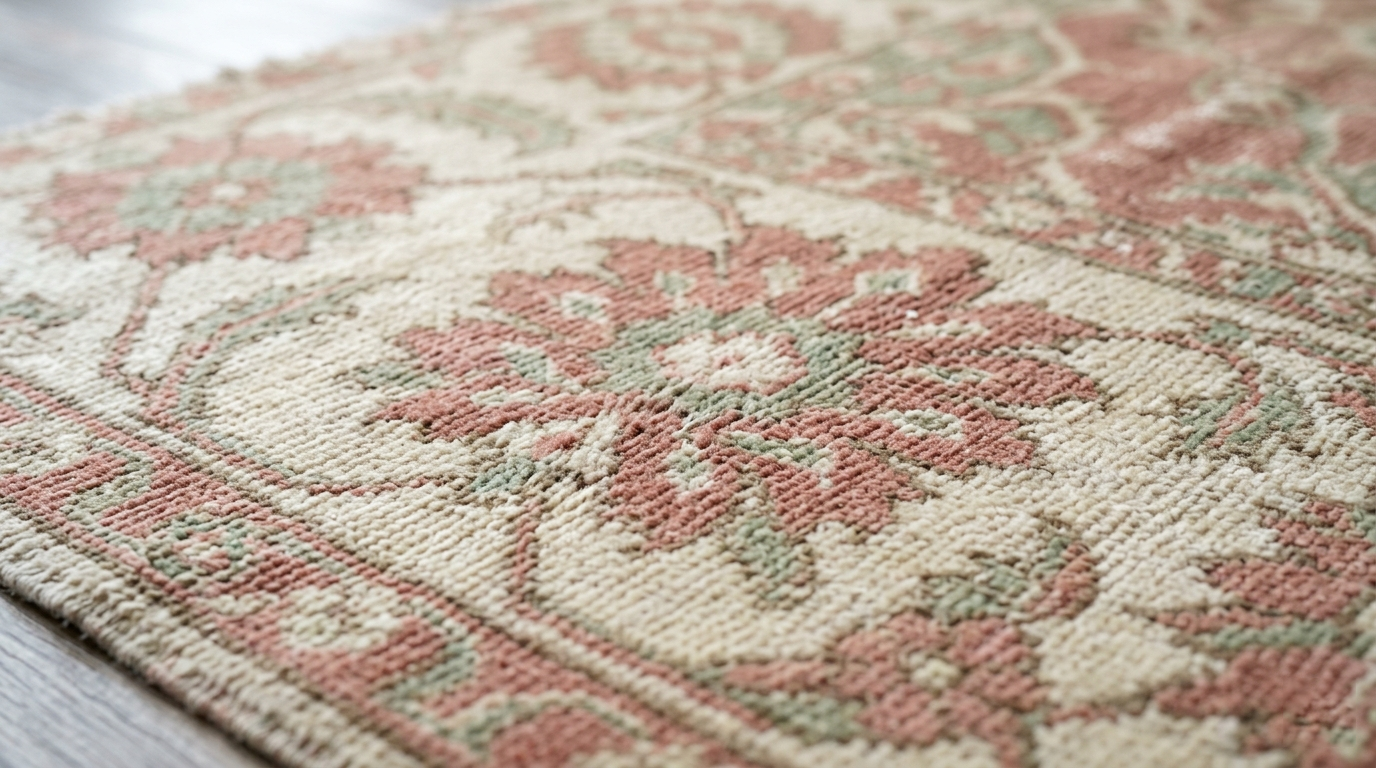
Oushak rugs have long been considered among the most versatile and designer-friendly rugs in the world. Their soft, muted color palettes — ranging from warm ivory, dusty rose, and sage green to faded terracotta and aged gold — make them exceptionally easy to incorporate into a wide variety of design schemes. Unlike rugs with harsh, saturated colors that can dominate a room, Oushaks have a natural, worn-in quality that feels inviting rather than imposing.
Interior designers particularly prize Oushak rugs for their large-scale, open field designs. The generous negative space within the pattern allows other design elements — furniture, art, architecture — to breathe and coexist without visual competition. This quality makes Oushak rugs an ideal foundation layer in a room, providing warmth and character without overwhelming the overall composition.
The wool used in authentic Oushak rugs is also exceptional in its softness and sheen. Known as “dead wool” or “pasture wool,” it is sourced from sheep that have been allowed to graze freely, resulting in a fiber with a naturally lustrous quality that catches and diffuses light beautifully. Over time, this wool develops a gentle patina that makes antique and vintage Oushaks look even more refined and distinguished than when they were first woven — a quality that is almost impossible to replicate in machine-made alternatives.
This is precisely why Oushak rugs are so frequently specified in high-end residential projects, luxury hotels, and boutique commercial spaces. They signal quality, authenticity, and taste without being loud about it.
What Inspires Oushak Rugs — and Where They Are Made
Oushak rugs take their name from the town of Uşak (historically spelled Oushak or Ushak) in western Anatolia, Turkey — a region that has been at the crossroads of Eastern and Western civilizations for millennia. Weaving in this area dates back to at least the fifteenth century, when Oushak rugs were already being exported to the royal courts and aristocratic households of Renaissance Europe. They appear in paintings by Holbein, Lotto, and other Old Masters, serving as a testament to how coveted these rugs were even in their own time.
The design vocabulary of Oushak rugs draws from a rich confluence of influences: Ottoman imperial court aesthetics, Persian floral traditions, Byzantine architectural motifs, and the natural landscape of the Anatolian plateau itself. Central medallion compositions, arabesque scrolls, graceful palmettes, and serene floral fields are all recurring elements, rendered in a style that is somehow both grand and gentle at the same time.
What distinguishes Oushak weaving from other Turkish rug traditions is its use of a distinctive Turkish double-knot (Ghiordes knot) on a cotton foundation, combined with the region’s prized local wool. The dyes used in traditional Oushak production were entirely plant- and mineral-based — saffron, pomegranate rind, madder root, and indigo among them — which accounts for the remarkably beautiful, time-softened hues that are the hallmark of antique Oushak pieces and continue to inspire contemporary reproductions.
Today, hand-knotted Oushak rugs are still produced in and around the Uşak region, as well as in other parts of Turkey, by skilled craftspeople who carry forward these centuries-old weaving traditions. Genuine hand-knotted Oushak rugs can take months or even years to complete, depending on their size and the intricacy of their design — a fact that makes them not just decorative objects, but genuine works of textile art.
What Makes Khotan Rugs Unique — and What Inspires Their Designs
If Oushak rugs represent the refined elegance of the Ottoman tradition, Khotan rugs offer something entirely different: a rare and captivating fusion of Chinese, Central Asian, and Middle Eastern design sensibilities that is unlike anything else in the world of oriental rugs.
Khotan rugs originate from the ancient oasis city of Khotan (also known as Hotan or Hetian) in the Xinjiang region of western China — a city that sat at one of the most strategically important junctions of the ancient Silk Road. For centuries, Khotan was a meeting point for merchants, diplomats, monks, and artists traveling between China, Persia, India, and the Byzantine Empire. This extraordinary cultural crossroads is reflected directly in the aesthetic DNA of Khotan rugs.
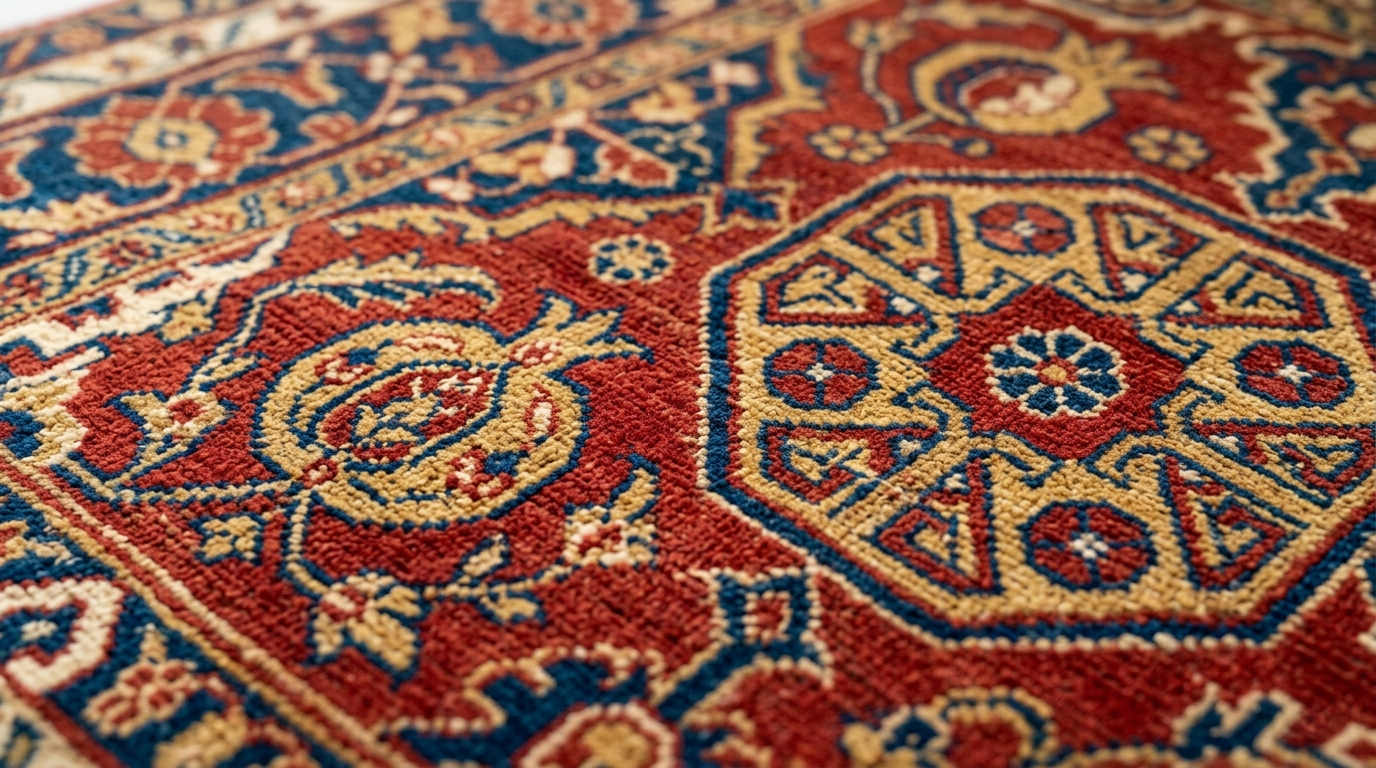
What makes Khotan rugs truly unique is the way they blend motifs from seemingly disparate traditions into a unified, harmonious whole. A single Khotan rug might feature Chinese pomegranates and cloud bands alongside Persian vases and medallions, all rendered in a color palette that reflects the region’s distinctive local dyeing traditions — deep indigo blues, warm ochre yellows, rich brick reds, and soft ivory grounds. The result is a rug that feels simultaneously exotic and familiar, ancient and strangely modern.
Khotan rugs are also distinguished by their structural characteristics. They are typically woven with a symmetrical (Turkish) knot on a silk or cotton warp, with a relatively short, dense pile that gives them a refined, almost jewel-like surface quality. The weave structure is notably precise, allowing for the sharp definition of complex geometric and floral motifs that might blur in a looser weave.
Among the most recognizable Khotan design elements are the three-medallion composition (often featuring round or pomegranate-shaped central medallions arranged vertically along the length of the rug), the vase design (showing ornate vessels from which elaborate floral arrangements grow), and a wide variety of cloud collar, bat, and peony motifs drawn from the Chinese decorative arts tradition. These motifs, rendered in the hand of Central Asian weavers, have a quality of freshness and originality that collectors and designers find endlessly compelling.
The relative scarcity of authentic antique Khotan rugs — production in the region was significantly disrupted during the twentieth century — has also contributed to their desirability and their rising value in the international market.
Why Designers Choose Oushak and Khotan Rugs for Their Projects
Both Oushak and Khotan rugs share certain qualities that make them particularly well-suited to sophisticated interior design work — but they serve different aesthetic purposes, which is part of why designers value having access to both.
Oushak rugs are the consummate background players: they set a tone, establish warmth, and create a sense of layered history in a space without demanding the spotlight. They work effortlessly in rooms with a neutral or earthy palette, under large dining tables, in bedroom settings, and in living spaces where the goal is a feeling of quiet luxury and understated elegance. They pair beautifully with natural materials — stone, linen, raw timber, rattan — as well as with antique furniture and contemporary minimalism alike.
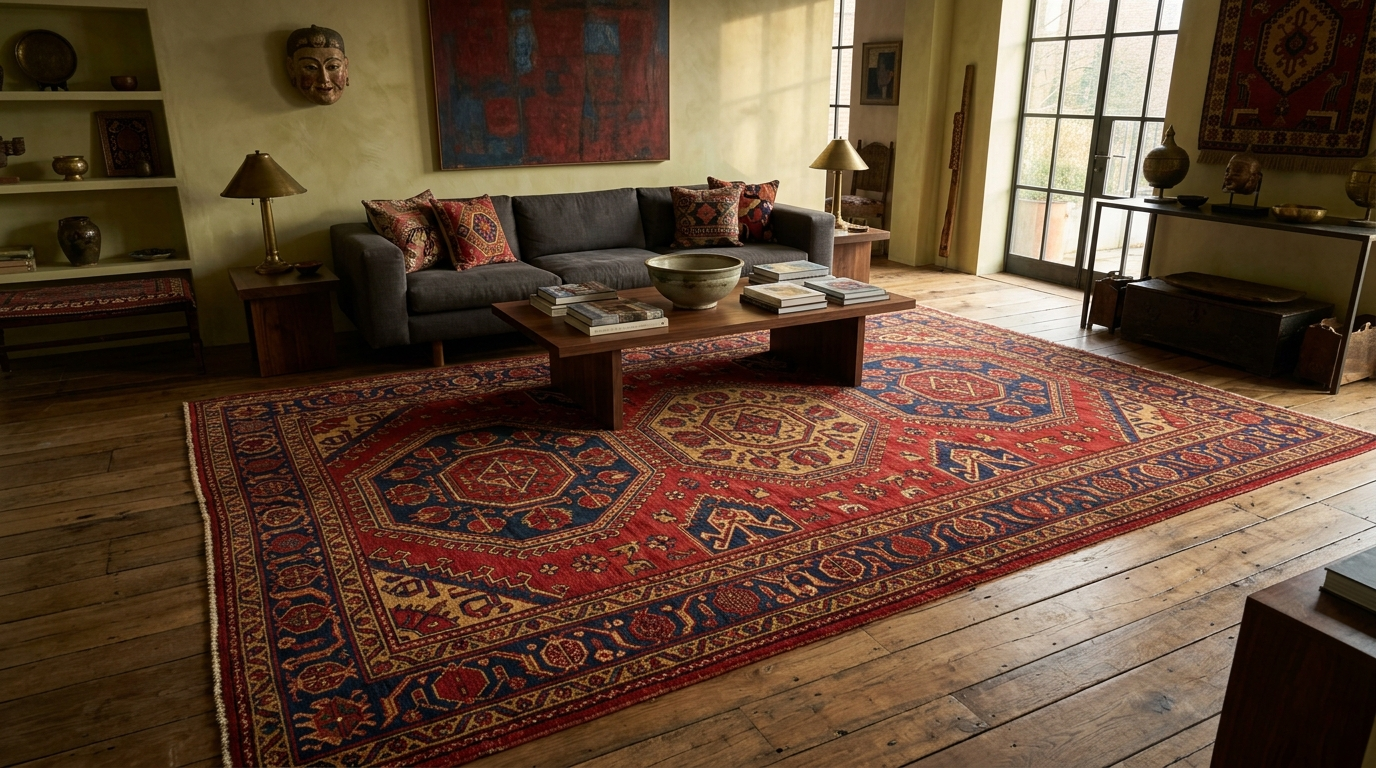
Khotan rugs, by contrast, tend to function more as focal points. Their graphic clarity, rich color, and distinctive motifs give them a strong visual presence that can anchor an entire room. A well-chosen Khotan rug in an entryway, study, or formal living room makes an immediate and sophisticated statement. Their connection to the Silk Road and the ancient trading world also lends them a sense of narrative depth that collectors and design-conscious clients respond to powerfully.
Both types of rug share the hallmark qualities that separate genuine hand-knotted rugs from their commercial alternatives: the tactile richness of natural wool or silk fibers, the subtle color variations that come from hand-dyeing, the gentle irregularities that mark human craftsmanship, and the capacity to improve with age in a way that no machine-made rug can replicate.
In an era when interiors are increasingly defined by their authenticity — by the presence of objects with genuine history, provenance, and craft value — Oushak and Khotan rugs represent exactly what discerning designers and clients are seeking.
At Weave NYC
At Weave NYC, we understand that the right rug is not simply a finishing touch — it is the foundation on which a truly exceptional interior is built. That is why we are proud to offer a carefully curated selection of original hand-knotted Oushak rugs and authentic Khotan rugs, each selected for the quality of its materials, the refinement of its weave, and the beauty of its design.
Whether you are a designer searching for the perfect Oushak to ground a Manhattan living room, a collector drawn to the rare Silk Road character of an antique Khotan, or a homeowner simply ready to invest in something genuinely extraordinary, we invite you to explore our collection at weavenyc.com. Our team is here to help you find the piece that speaks to your space, your taste, and your vision.
Because some things are worth doing beautifully — and a rug that lasts a lifetime, and tells a story as old as civilization itself, is one of them.